
A buyer can receive four offers labelled “Byadgi chilli” and still be comparing materially different raw materials. Color value, pungency, pod structure, breakage risk and powder yield can change the result in a sauce, seasoning blend or oleoresin extraction line.
Variety names help narrow the field, but they do not replace lot-specific testing. At Byadgi Chilli, the commercial starting point is the buyer’s finished-product requirement, followed by variety selection and verification against an agreed specification.
Quick answer: how to compare Byadgi chilli varieties
Use this order when evaluating Byadgi 355, 1048, Syngenta 2043 and Syngenta 5531:
- Define the required ASTA color value for the finished application.
- Set an acceptable SHU range rather than asking only for “low pungency.”
- Choose the pod shape and wrinkle level needed for sale or processing.
- Assess durability according to packing, handling and shipping distance.
- Select whole, stemless, crushed, flake or powder form.
- Match each variety to its strongest commercial application.
- Approve the shipment by lot sample, COA and residue requirements.
The practical comparison is straightforward. Byadgi 355 is usually selected for its traditional wrinkled appearance and relatively mild heat. Byadgi 1048 tends to offer a more processing-oriented balance of color and manageable pungency. Syngenta 2043 is commonly considered where firmer pods and handling performance matter. Syngenta 5531 is generally evaluated for stronger color potential, physical durability and industrial processing.
These are buying profiles, not guaranteed specifications. Growing conditions, harvest maturity, drying, storage and lot composition can move both ASTA and SHU results.
Byadgi chilli varieties comparison table
The ranges below are indicative commercial screening ranges. They are useful for shortlisting, but a supplier should not treat them as substitutes for an accredited laboratory report on the offered lot.
| Byadgi variety | Indicative ASTA | Indicative SHU | Pod & wrinkle profile | Handling durability | Common forms | Best-fit applications |
|---|---|---|---|---|---|---|
| Byadgi 355 | 80-110 ASTA | 8,000-15,000 SHU | Long, thin, deeply wrinkled pods; traditional appearance | Lower to medium | Whole, stemless, flakes, powder | Visible whole-chilli trade, mild spice blends |
| Byadgi 1048 | 100-140 ASTA | 8,000-16,000 SHU | Wrinkled, uniform pods; more body than 355 | Medium | Whole, stemless, crushed, flakes, powder | Color-focused grinding, seasoning blends, sauces |
| Syngenta 2043 | 100-140 ASTA | 10,000-18,000 SHU | Uniform pod structure, moderate wrinkles, firmer walls | Medium to high | Whole, stemless, flakes, powder | Export handling, food-service, grinding |
| Syngenta 5531 | 120-180 ASTA | 8,000-15,000 SHU | Broad/medium-long pods, visible wrinkles, firm structure | High | Whole, stemless, crushed, flakes, powder | High-color powder, sauces, oleoresin feedstock |
Do not write these ranges directly into a purchase contract without qualification. Contract the actual minimum ASTA, permitted SHU band, moisture limit, form and testing method required for the order.
Running example: chilli for sauce manufacturing
Our running example is a sauce manufacturer buying stemless Byadgi chilli for milling. The factory needs a minimum of 120 ASTA at receipt, prefers 8,000-12,000 SHU, cannot accept excessive broken pods before grinding, and requires compliance with its destination-market pesticide residue program.
On variety name alone, Syngenta 5531 appears to be the closest fit. The buyer should still compare actual lots of 5531, 1048 and possibly 2043 because a well-grown 1048 lot can outperform a poorly harvested or badly stored 5531 lot.
Compare Byadgi chilli varieties by ASTA color value
ASTA color value estimates the extractable color in chilli and paprika products. Buyers use it to compare raw material for powder, sauce, oleoresin and seasoning applications where red color must remain consistent.
A higher number is not automatically better. It may carry a higher raw-material cost, and part of that value can be wasted if the application needs only moderate color. Processing conditions also matter. Extended exposure to heat, oxygen and light can reduce color after the chilli leaves the supplier.
Use a minimum ASTA requirement where color is commercially important. Avoid approving a shipment solely from the visual redness of a sample. Lighting, surface condition, oil content and photography can all distort visual judgment.
Byadgi 355 ASTA profile
Byadgi 355 often sits at the lower end of this four-variety comparison. Its value is frequently tied to traditional pod appearance, wrinkles and mildness rather than maximum extractable color.
That does not make 355 a low-quality chilli. It makes it a different purchasing choice. A whole-spice distributor may accept moderate ASTA because customers judge the product by pod identity and appearance. A powder plant trying to reach a strong red shade with minimal dosage may prefer a higher-color lot.
Byadgi 1048 ASTA profile
Byadgi 1048 is commonly screened as a middle-to-high color option. It can suit processors who need better color efficiency while retaining recognizable Byadgi characteristics.
For the sauce manufacturer in our example, an offered 1048 lot testing at 128 ASTA could meet the color requirement. If its SHU result also falls inside the agreed band, rejecting it merely because it is not Syngenta 5531 would be poor procurement.
Syngenta 2043 and 5531 ASTA profiles
Syngenta 2043 can provide commercially useful color with firmer handling characteristics. Syngenta 5531 is usually the first variety screened when the request combines high ASTA, relatively low heat and better transport durability.
The phrase “high ASTA” still needs a number. For one buyer it may mean 100 ASTA; for another it may mean at least 160. State the minimum at the agreed point of testing, then define whether the contract result is based on the loading sample, independent inspection sample or arrival sample.
ASTA publishes recognized analytical methods used by the spice trade through its official analytical methods program. Put the method or mutually accepted equivalent in the specification so buyer and seller are measuring the same property.
Compare Byadgi varieties by SHU and pungency
Scoville Heat Units express pungency, but an SHU result should be treated as a range-controlled ingredient property rather than a marketing adjective. “Mild” can mean different things to a whole-spice trader, a sauce manufacturer and a paprika oleoresin processor.
Traditional Byadgi types are known for color with restrained heat compared with many pungent Indian chillies. Variation still occurs. Field stress, maturity, seed and placental material, blending, and sampling can shift the reported result.
Set both a lower and upper boundary if flavor consistency matters. An upper limit protects a mild formulation. A lower limit matters when the chilli must contribute a noticeable heat profile rather than color alone.
For the example sauce, the target is 8,000-12,000 SHU. A 5531 lot at 14,500 SHU could have excellent color and clean physical quality but still increase the reformulation burden. The processor would need to reduce chilli dosage, blend with a lower-pungency material or reject the lot.
Blending can solve a genuine formulation problem, but it must be controlled. Mixing lots without testing can create an apparently uniform shipment with uneven pungency between bags. Require a representative composite sample and define how the lot is formed.
The international standard ISO 3513 describes determination of Scoville index for chillies through high-performance liquid chromatography. Buyers can review the scope on the ISO standard page and agree an appropriate laboratory method with the supplier.
Compare pod shape, wrinkles and visual grade
Whole dried chilli buyers purchase a visible agricultural product. Powder buyers purchase processing performance. That difference changes the value of wrinkles, pod length and uniformity.
Byadgi 355 generally carries the strongest association with long, thin and heavily wrinkled pods. Those wrinkles can be commercially desirable in markets where buyers recognize traditional Byadgi appearance. They also create more fragile edges and irregular surfaces that can collect field dust if post-harvest handling is weak.
Byadgi 1048 commonly presents a somewhat more uniform processing profile while retaining visible wrinkles. Syngenta 2043 is often considered firmer and more regular. Syngenta 5531 tends to combine recognizable wrinkling with better body and durability than delicate traditional material.
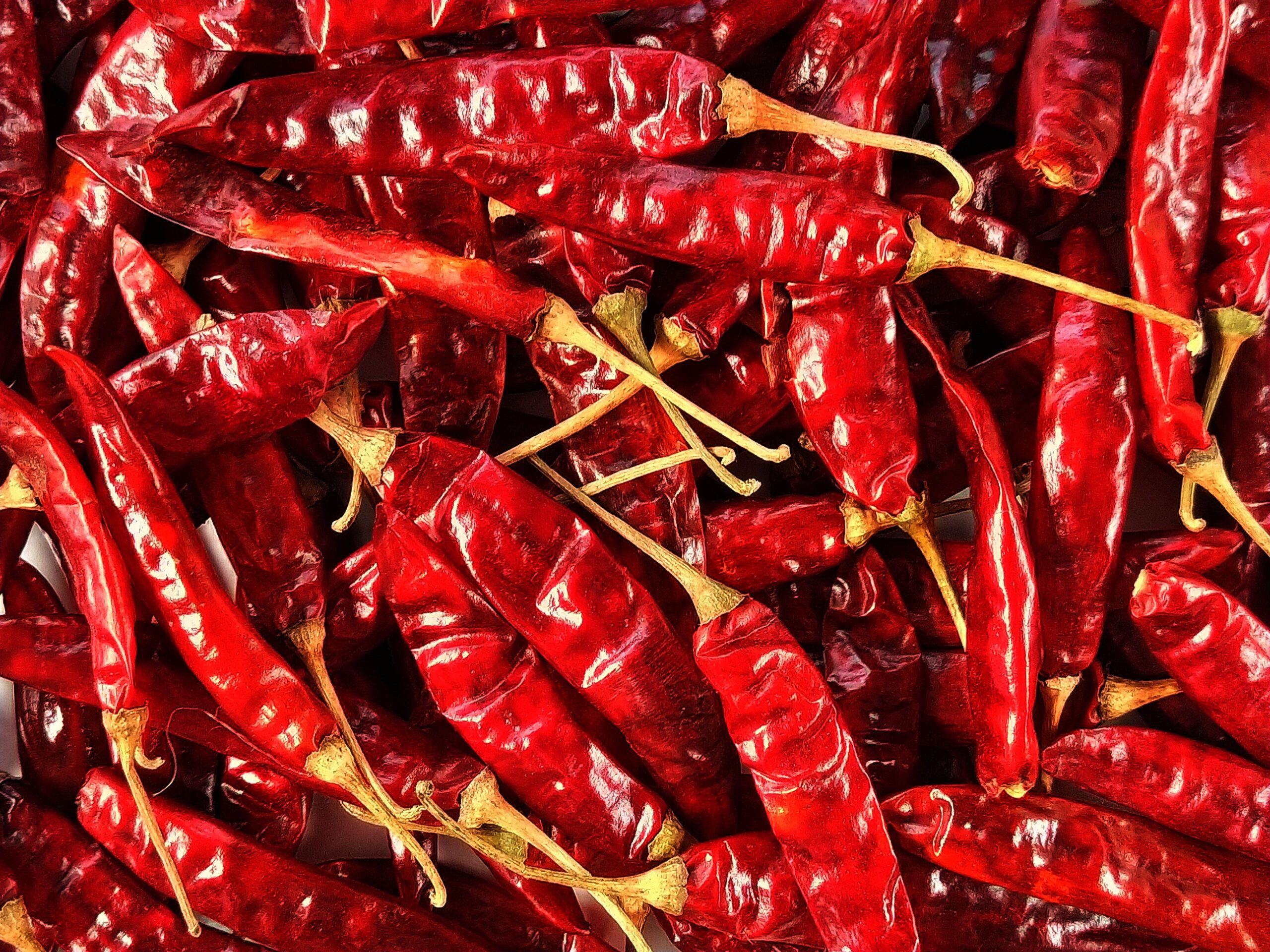 Byadgi Pod Structure: Wrinkle Density vs Physical Handling Durability
Specify visual requirements with tolerances. Words such as “premium,” “bold” and “deeply wrinkled” are subjective unless the approved sample controls the transaction.
A workable whole-pod approval should address:
- General pod length or size grade
- Expected wrinkle level and shape
- Percentage of broken or damaged pods
- Permitted discoloration and pale pods
- Foreign matter and extraneous matter limits
- Stem status and acceptable stem percentage
Use photographs to support the approved sample, not replace it. Camera processing can intensify red color, while a carefully arranged handful can conceal the broken material elsewhere in the bag.
For powder production, pod beauty has less value. The processor should focus on ASTA, SHU, moisture, cleanliness, stem percentage, milling behavior and microbiological requirements. Paying a premium for exhibition-grade whole pods makes little sense if they go directly into a grinder.
Compare Byadgi chilli durability for storage and export
Dry chilli is not indestructible. Pods can fracture during grading, compression, bagging, container loading and inland transport. Deep wrinkles and thin walls increase visual appeal in some grades but can also create weak points.
Moisture management introduces a trade-off. Chilli dried aggressively may feel crisp and store safely under suitable conditions, yet it may break more readily. Material with higher moisture can be more flexible, but excessive moisture raises storage, mold and quality risks. The correct limit must be agreed and verified rather than judged by hand.
Byadgi 355 usually needs more careful handling if whole-pod presentation must survive a long route. Syngenta 2043 and 5531 are generally stronger candidates where loading efficiency and reduced breakage matter. Byadgi 1048 sits between those profiles, depending heavily on the lot.
For our sauce manufacturer, some breakage is acceptable because the pods will be milled. Excessive breakage is still a warning. It can indicate over-drying, rough handling or weak packaging, and smaller fragments are more exposed to oxidation and contamination.
Inspect packaging as part of the chilli specification. A strong cultivar in unsuitable bags can arrive in worse condition than a more fragile cultivar packed and loaded carefully. Ask how the bags are lined, how container moisture is managed and whether the loading pattern places excessive pressure on lower layers.
Storage time matters too. ASTA can decline during extended storage, especially with poor protection from heat, oxygen and light. Ask for crop and processing timing, then verify the current lot rather than relying on its original harvest profile.
Choose the right form of each Byadgi chilli variety
The available form affects price structure, processing work, contamination control and the meaning of the quality specification. Do not request a variety and leave the form undecided.
Whole chilli with stem is suitable when the buyer has destemming capacity or sells a traditional whole product. It usually involves less processing before shipment, but stems add non-coloring material and affect usable yield.
Stemless whole chilli reduces that burden. The specification should define the tolerated residual stem percentage because “stemless” rarely means that every individual calyx and stem fragment has been removed without exception.
Crushed chilli and flakes need controls for particle size, seed distribution and visual consistency. Powder requires even tighter agreement on mesh, ASTA, SHU, moisture, microbiology, adulteration controls and packaging. Once ground, visual identification of the cultivar becomes much more difficult.
The example sauce plant initially requests stemless whole 5531. That choice lets its team inspect the incoming material and mill it to the required particle size. If it switched to powder, it could remove destemming and grinding from its plant, but supplier qualification and analytical verification would become more important. Choose the form according to who can control the process best. A buyer with validated cleaning and milling equipment may prefer whole or stemless pods. A smaller manufacturer without dust control, metal detection or consistent milling may obtain a more repeatable result from qualified bulk powder.
Best commercial applications for Byadgi 355, 1048, 2043 and 5531
When to buy Byadgi 355
Select Byadgi 355 when traditional wrinkles and recognizable whole-pod character carry commercial value. It is a logical candidate for whole-spice retail packs, regional recipes and blends where mild chilli flavor is wanted without paying only for maximum ASTA. Handle it carefully. If a customer expects intact, attractive pods after a long shipment, test the packaging and loading arrangement before scaling the order.
When to buy Byadgi 1048
Choose Byadgi 1048 when the application needs a practical balance of color, low-to-moderate pungency and processing suitability. It can work well for powders, seasoning blends and sauces when a tested lot meets the actual color target. It is also a useful alternative during procurement. If 5531 availability is constrained, an approved 1048 lot may protect production better than insisting on a name while accepting weaker test results.
When to buy Syngenta 2043
Consider Syngenta 2043 where pod firmness, uniformity and handling performance are important alongside useful color. It can suit buyers receiving whole or stemless pods through longer logistics chains. Watch pungency closely. A lot that runs hotter than the formulation target may be unsuitable even when its physical condition is excellent.
When to buy Syngenta 5531
Syngenta 5531 is often the strongest first candidate for high-color powder, sauces, seasoning systems and extraction. Its combination of color potential, relatively controlled heat and pod durability gives it broad industrial relevance. Demand has also encouraged loose use of the name. A label or verbal claim is not botanical or analytical proof. Approve the physical sample and COA, and reserve the right to test the shipment.
For our sauce manufacturer, 5531 remains the preferred starting point. The final award goes to the lot that reaches at least 120 ASTA, stays within 8,000-12,000 SHU, meets residue requirements and survives handling acceptably. Variety supports that decision. It does not make it.
How to source the right Byadgi chilli lot
A useful supplier inquiry begins with the application. Tell the exporter whether the chilli will be sold whole, ground into powder, blended into seasoning, processed into sauce or used for extraction. That information prevents unsuitable offers that look attractive on a short specification sheet.
Send a written requirement covering variety preference, form, minimum ASTA, SHU range, moisture, stem tolerance, packing and destination-market compliance. Add microbiological limits where relevant. If the material will be treated after receipt, state that too, but do not assume later treatment corrects poor raw-material control.
At BST Spices’ blog, procurement guidance is built around comparing measurable lot characteristics rather than presenting every Byadgi name as interchangeable. That approach is especially important for buyers who need repeat production across several shipments.
What the sourcing workflow should look like
- Submit the finished-use requirement: In the sauce example, that means stemless material, minimum 120 ASTA, 8,000-12,000 SHU, acceptable breakage and documented pesticide residue compliance.
- Shortlist suitable varieties: Syngenta 5531 comes first, while qualifying lots of 1048 and 2043 remain possible alternatives. Byadgi 355 is not excluded, but its usual color and durability profile makes it less likely to meet this particular brief.
- Sample the offered lot: The sample should represent the actual sale lot, not a generic reference retained from a previous crop. Its bag or seal identification needs to connect it to the commercial offer.
- Review physical and laboratory results together: A high ASTA result does not cancel unacceptable foreign matter. Attractive pods do not cancel excessive SHU or a residue failure.
- Write approved values into the contract: This includes test methods, tolerances, packing, inspection responsibility and the action to be taken if results fall outside specification.
- Complete pre-shipment verification: Keep a sealed reference sample so any later disagreement can be investigated against known material.
This is the work a specialist sourcing process removes from the buyer’s daily follow-up: broad variety requests become application-specific lot comparisons, and commercial approval is tied to evidence. It cannot remove agricultural variation. No responsible supplier should promise that a cultivar name guarantees one fixed ASTA or SHU result.
Pesticide residues, IPM and export compliance
“IPM” and “residue compliant” should not be treated as interchangeable claims. Integrated pest management describes a crop-protection approach. Compliance depends on the residues found, the legal limits in the destination market and the testing scope.
Start with the destination country and intended food category. Maximum residue limits can differ between markets, and buyer standards may be stricter than legal limits. The European Commission, for example, maintains an official EU pesticides database for checking active substances and maximum residue levels.
Ask which compounds the laboratory screen covers. A certificate saying “tested” is incomplete without the analyte scope, detection limits, sample identity, test date and laboratory information.
Sampling is a common failure point. Testing a clean pre-season reference sample does not establish that every later shipment complies. Residue control should connect farm practices, procurement segregation, lot traceability and shipment-level verification according to risk.
The same principle applies to aflatoxins, microbiology and adulteration. Requirements vary by product form and destination. Powder generally deserves tighter supplier control because defects cannot be identified visually after milling.
For the sauce manufacturer, residue approval is a gate, not a score that can be balanced by stronger color. A 160 ASTA lot that fails the destination program is not an acceptable bargain.
Common mistakes in a Byadgi chilli varieties comparison
The first mistake is buying the variety name instead of the lot. Crop conditions and post-harvest handling create overlap between cultivars, so an actual 1048 result may fit a specification better than an offered 5531 lot.
The second is asking for the highest ASTA without calculating the application need. Higher-color material can be commercially sensible, but only if it improves dosage, consistency or finished-product value enough to justify the selection.
The third is using “low pungency” without an SHU band. Give a maximum, and add a minimum if the chilli must contribute heat.
The fourth is approving a polished sample with no sampling protocol. Confirm that it represents an identified sale lot. Keep a sealed counterpart.
The fifth is ignoring stems and usable yield. Compare offers on the form delivered and the material your plant can actually use. A lower-priced stemmed offer may not remain cheaper after destemming losses, labor and disposal.
The sixth is treating pesticide compliance as a general supplier characteristic. Compliance attaches to a defined product, lot, test scope and market requirement.
The final mistake is failing to define claims procedure and testing method before shipment. Once goods arrive, disagreements over sample identity or laboratory methods become slower and more expensive to resolve.
FAQ about Byadgi chilli varieties
Which Byadgi chilli variety has the highest ASTA value?
Syngenta 5531 is generally the strongest high-ASTA candidate among Byadgi 355, 1048, Syngenta 2043 and Syngenta 5531. Actual lots overlap, so request a current COA and representative sample. Do not assume every 5531 lot has higher color than every 1048 or 2043 lot.
Is Byadgi 355 better than Syngenta 5531?
It depends on the application. Byadgi 355 is often better when buyers value traditional long, deeply wrinkled pods and mild character. Syngenta 5531 is usually better for high-color processing, firmer handling and applications where consistent industrial performance matters.
What SHU range should I specify for low-pungency Byadgi chilli?
Many commercial Byadgi requirements sit within a broad low-to-moderate range, but the correct limit comes from the recipe. If a mild sauce performs correctly at 8,000-12,000 SHU, write that range into the inquiry rather than requesting “low heat.” Test production samples before fixing a new specification.
Is stemless Byadgi chilli better for bulk powder production?
Stemless chilli usually improves usable color-bearing yield and reduces work before milling. It can cost more because destemming has already been performed. Compare residual stem tolerance, cleanliness, ASTA and total usable yield, not just the price per unit of delivered weight.
Can I buy Byadgi powder based only on ASTA and SHU?
No. Powder specifications should also address moisture, mesh or particle size, microbiology, foreign matter controls, adulteration, residues, packaging and traceability. Depending on the destination and application, aflatoxin limits and treatment status may also be required.
Does a wrinkled pod mean the chilli has higher color?
No. Wrinkles are a physical varietal and drying characteristic, not a reliable measurement of extractable color. Use laboratory ASTA results for color and an approved sample for visual grade.
How do I verify Syngenta 5531 before placing a wholesale order?
Request a representative lot sample, physical photographs, crop information and a COA covering the agreed properties. Test ASTA, SHU and relevant contaminants through a suitable laboratory, then connect the approved sample to the contract and shipment identification.
Which Byadgi chilli is best for long-distance export?
Syngenta 5531 and Syngenta 2043 are generally considered stronger candidates where pod durability matters. Packaging, moisture, loading pressure and storage conditions can outweigh the varietal advantage, so evaluate the complete shipping plan.
Make the buying decision from the application backward
Choose Byadgi 355 for traditional wrinkled whole-pod character. Screen 1048 for a balanced color and processing profile. Consider Syngenta 2043 when firmness and handling matter. Start with Syngenta 5531 when high color, restrained heat and durability are the leading requirements. Then test the offered lot. A qualified commercial buyer should issue one written specification covering ASTA, SHU, form, physical quality, moisture, packing and destination compliance. Compare representative samples against that document and award the order to the lot that meets the finished-product requirement, even when another variety has the stronger name recognition.